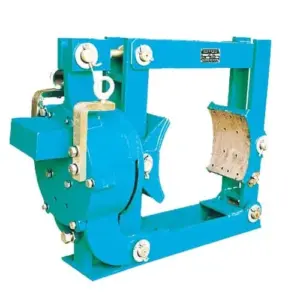

Port cranes (STS, RTG, RMG), offshore winches, and coastal conveyors face the harshest environment for mechanical equipment: salt spray, high humidity, and UV radiation. A standard industrial brake installed here will often seize within 6 months—pivots rust solid, linings delaminate, and thruster rods pit, destroying seals.
This article details the corrosion protection standards (ISO 12944) and specific upgrade packages required for brakes in marine and port environments. We cover painting systems, material upgrades, and design features for our YWZ13 drum brakes and SH fail-safe disc brakes.
Side-by-side comparison: A standard brake rusted after 1 year vs. a C5-M treated brake in good condition.
1) Understanding ISO 12944 Categories
Don’t just ask for “marine paint.” Specify the environment category to ensure the coating thickness and chemistry match the lifespan you expect.
| Category | Environment | Typical Application | Brake Specification |
|---|---|---|---|
| C3 (Medium) | Industrial/Urban, some humidity, low salt. | Indoor factories, general warehousing. | Standard Polyurethane/Alkyd paint (80–120 µm). |
| C4 (High) | Industrial/Coastal areas with moderate salt. | Shipyards, inland chemical plants. | Epoxy Zinc-Rich Primer + PU Topcoat (160–200 µm). |
| C5-M (Very High Marine) | Coastal/Offshore, high salt, continuous condensation. | Port Cranes (STS/RTG), Offshore Platforms, Marine Winches. | 3-Layer System (Zinc-Rich Epoxy + High-Build Epoxy + PU) (> 240–320 µm) + Stainless Hardware. |
2) Pivot Points: The Weakest Link
Paint protects the frame, but it can’t protect the moving pins. If a pivot pin rusts, the brake arm seizes. The thruster might push, but the arm won’t move, leading to dragging and torque loss.
The Solution: Material Upgrades
- Standard Duty: Carbon steel pins + Grease fittings. (Okay for indoors).
- Port/Marine Duty: Stainless Steel Pins (304 or 316) are mandatory.
- Bushings: Use self-lubricating composite or bronze bushings that resist seizing even if grease intervals are missed.
Field Check: If you see rust streaks running down from the hinge points, your pins are carbon steel and are already corroding inside. Upgrade to stainless immediately.
3) Thruster Rod Protection
Electro-hydraulic thrusters (like Ed/YT1 series) have a piston rod that extends and retracts. In salty air, a standard chrome rod can develop micro-pitting. These pits act like a cheese grater on the wiper seal, causing oil leaks.
Options for C5 Environments
- Hard Chrome (Thick Layer): Standard chrome is often too thin. Specify “Marine Grade” hard chrome plating.
- Ceramic Coating: High-end thrusters use ceramic-coated rods which are impervious to salt corrosion.
- Protective Bellows: A rubber boot covers the rod, preventing salt spray from touching it. (Simple, cheap, effective).
YWZ13 Series (Ask for the “Marine Thruster” option)
4) Hardware and Fasteners
A C5-painted brake frame held together with black-oxide bolts will fail. The bolts will rust, making maintenance (pad changes, adjustments) impossible without an angle grinder.
- Minimum Spec: Dacromet or Geomet coating (high corrosion resistance zinc-flake).
- Preferred Spec: Stainless Steel (A2/A4 grade) hardware for all external fasteners, limit switch brackets, and manual release levers.
5) Electrical Enclosures and Breathers
Salt mist loves to enter terminal boxes. Once inside, it corrodes contacts and trips breakers.
- Sealing: Use IP66 rated terminal boxes (powerful water jet protection).
- Breathers: Install a Gore-Tex® style breather vent. This allows pressure equalization (heating/cooling cycles) without sucking in damp salty air. Without a breather, the thruster sucks in moisture during cooldown (vacuum effect), leading to water in the oil.
- Heaters: Anti-condensation heaters are recommended for motors/thrusters in high-humidity ports to keep windings dry when idle.
6) Maintenance in Corrosive Zones
Even a C5-M brake needs care:
- Washdown: Rinse salt deposits off the brake with fresh water regularly (if allowed).
- Touch-Up: Repair paint chips immediately. Rust spreads under the paint film (undercutting).
- Exercise: Operate the manual release and linkages monthly to prevent static seizing.
- Grease: Purge old grease from pivots until fresh grease comes out. This pushes out water/salt contaminants.
Need a corrosion-resistant brake for your port crane?
We offer specialized “Port Duty” packages for YWZ and SH series brakes. This includes C5-M epoxy painting, stainless steel pins, IP66 protection, and marine-grade thrusters. Don’t let rust stop your crane—specify the environment when you quote.
Contact us for C4/C5-M Marine Brake specifications and pricing.