
Disc brakes and drum brakes both use friction to generate torque, but their strengths differ. Disc brakes generally offer better heat dissipation, more consistent torque under temperature changes, and simpler inspection of pads. They are commonly preferred for high-speed shafts, frequent braking, and applications requiring stable performance—such as wind turbines, high-duty hoists, and modern crane systems.
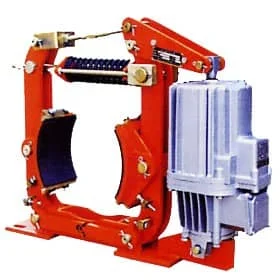
Drum brakes are rugged, cost-effective, and widely used in heavy industry. Electro-hydraulic drum brakes (block brakes) are common on cranes, conveyors, and traveling mechanisms due to their proven reliability and ease of maintenance in harsh environments. They also tolerate contamination in some cases better than exposed discs, depending on design.
Choose based on: required torque, duty cycle and heat load, available space, shaft speed, environmental exposure (dust/water/corrosion), maintenance access, and system standardization. For best results, match brake type to both the mechanical layout and the operating profile—not just peak torque.