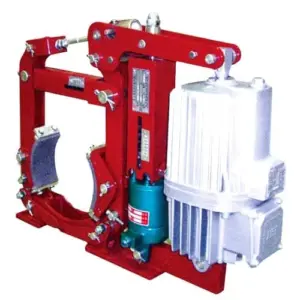
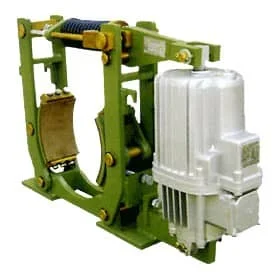
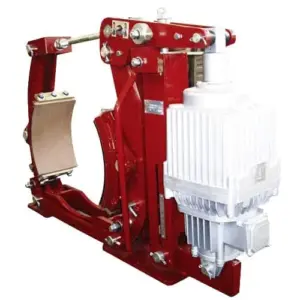
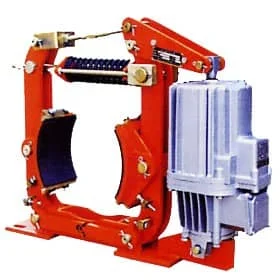
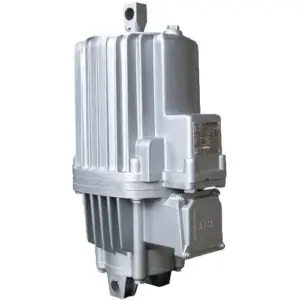
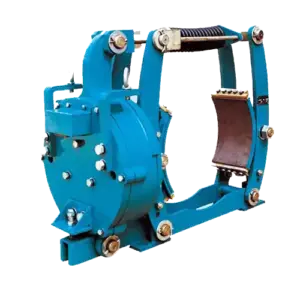
Los molinos de acero y las plantas de metalurgia exponen los frenos a altas temperaturas ambiente, cargas pesadas, golpes, polvo abrasivo y, a menudo, escamas o niebla de aceite. Un freno adecuado debe proporcionar un alto par con fricción estable a temperaturas elevadas, resistir la pérdida de rendimiento y tolerar contaminantes severos. La robustez mecánica es fundamental: los pasadores, bujes y carcasas deben soportar vibraciones e impactos sin perder alineación o holguras.
La selección del material de fricción es especialmente importante. Los revestimientos semimetálicos o sinterizados suelen ser preferidos por su mayor resistencia al calor y durabilidad, aunque se debe considerar el desgaste del disco/banda. La sellación y protección contra la corrosión también son importantes, especialmente cuando hay rociado de agua de enfriamiento o humedad.
Además, el acceso a mantenimiento es un requisito práctico. En los molinos, el tiempo de inactividad es costoso, por lo que los frenos deben permitir una inspección y reemplazo rápidos de las piezas de desgaste. Para grúas críticas para la seguridad (por ejemplo, grúas de cucharón), la redundancia y el diseño a prueba de fallos son esenciales. Finalmente, asegúrese de que el freno y el actuador puedan manejar el ciclo de trabajo—los arranques/paradas frecuentes y los escenarios de emergencia generan un calor significativo que debe disiparse sin degradar el rendimiento.