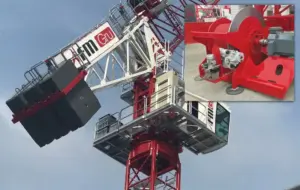

Port cranes are large, high-profile structures that can act like sails in extreme winds. During typhoons, the risk is not only uncontrolled travel along the rails, but also wheel lift, derailment, and structural damage. Storm brakes protect the crane by providing dedicated, high holding force independent of the normal travel brake. Many systems are fail-safe, meaning they engage automatically when power is lost—critical because severe weather often causes electrical outages.
Common storm safety devices include hydraulic rail clamps, top-of-rail brakes, wedge-type storm brakes, and wheel brakes. In many ports, storm securing is a complete procedure: brakes apply, rail clamps lock, wind pins or tie-downs engage, and operational interlocks prevent travel.
Selection should be based on the crane’s rated wind speed requirements, rail conditions, corrosion environment (salt spray), and maintenance capability. Proper inspection—especially of hydraulic seals and friction surfaces—ensures storm brakes deliver their rated holding force when it matters most.