
Brake linings (pads and shoes) are consumables—they are supposed to wear out. However, the way they wear tells you everything about the health of your braking system. A lining that wears evenly over 12 months is a success; a lining that wears into a wedge shape in 3 weeks or glazes over in 2 days is a system failure.
This article provides a practical guide to inspecting used brake linings, determining when to replace them, and diagnosing the root causes of abnormal wear. We focus on the friction materials used in our core products: YWZ13 electro-hydraulic drum brakes (curved shoe linings) and SH hydraulic fail-safe disc brakes (flat pads).
Comparison photo: (A) New lining, (B) Normal worn lining (even thickness), (C) Tapered wear, (D) Glazed/shiny surface.
1) Replacement Criteria: The “Hard” Limits
Before analyzing wear patterns, you need to know the absolute discard limit. Running past this limit damages the brake wheel/disc (expensive) and risks total torque loss (dangerous).
For Riveted Linings (Common on YWZ/Drum Brakes)
The limit is defined by the rivet heads. You must never let the friction material wear down to the point where metal rivets touch the brake wheel.
- Rule of Thumb: Replace when friction material thickness above the rivet head is < 1.0–1.5 mm.
- Risk: Scored brake wheels require machining or replacement, costing 10x more than a lining set.
For Bonded Pads (Common on SH/Disc Brakes)
Since there are no rivets, you can theoretically use more material, but heat transfer changes as the pad gets thin.
- Rule of Thumb: Replace when remaining friction material thickness is < 2.0–3.0 mm (or reaches the wear indicator groove if present).
- Wear Switches: Most industrial brakes have a mechanical or inductive wear switch. Do not rely solely on this switch. It is a “final warning,” not a maintenance planner. Visual inspection is primary.
2) Reading the “Old” Pads: What Abnormal Wear Means
Don’t just throw old pads in the trash. Look at them. They contain the history of your brake’s alignment and operation.
| Wear Pattern | Visual Appearance | Likely Root Cause | Corrective Action |
|---|---|---|---|
| Tapered / Wedge Wear | One end of the shoe/pad is much thinner than the other. | Misalignment (brake not centered), worn pivot pins causing tilt, or uneven shoe clearance setting. | Re-align brake base; replace worn bushings/pins; check shoe auto-aligning device. |
| Glazing | Surface is shiny, mirror-like, and hard. Poor braking torque. | Light duty (brake never gets hot enough to clean itself), dragging, or oil mist contamination. | Check for oil leaks; sand the surface (temporary); verify correct friction grade for duty. |
| Grooving / Scoring | Deep scratches or ridges in the direction of rotation. | Abrasive dust (sand, cement), embedded metal particles, or damaged disc/wheel. | Inspect disc/wheel surface; improve dust guards; clean friction area. |
| Heat Cracking / Crumbling | Surface cracks, edges breaking off, burnt smell. | Severe overheating, dragging (brake not releasing), or emergency stops exceeding rating. | Check for dragging immediately (thruster stroke/hydraulics); verify duty cycle sizing. |
| Inner/Outer Radius Difference | (Disc brakes) Pad wears more on the outer or inner edge. | Caliper mounting flex, disc runout, or pads not parallel to disc face. | Check caliper mounting bolt torque; measure disc runout. |
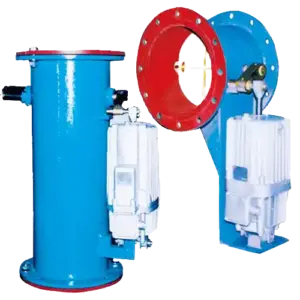
YWZ13 Series Electro-Hydraulic Drum Brake (Check shoe alignment features)
3) The “Bedding-In” Reality: Why New Pads Don’t Work perfectly Immediately
When you install new linings, they rarely match the brake wheel/disc geometry perfectly (even if machined correctly). The contact area might be only 50–60% initially.
- The Risk: Braking torque will be lower than rated for the first few hundred stops.
- The Procedure: Perform a “bedding-in” (burnishing) cycle if possible. Run the machine at partial speed/load and make repeated moderate stops to shape the pads to the disc.
- Field Check: After installation, check the contact pattern (look for the dull rubbed area). Do not certify full capacity until contact is >70–80%.
4) Friction Material Selection: Not All “Linings” Are the Same
Replacing a lining with “whatever fits” is dangerous. Friction coefficient ($\mu$) varies by material:
- Woven/Molded Organic (Standard): $\mu \approx 0.35–0.4$. Good for general duty, quiet, kind to discs.
- Sintered Metal: $\mu \approx 0.3–0.35$ (stable at high heat). Good for heavy duty/high temp, but aggressive on discs and noisy.
- High-Friction Composite: $\mu \approx 0.45+$. Used where high torque is needed in small space.
If you put a low-friction material on a brake designed for high-friction pads, the brake will not hold the load, even if the dimensions are perfect. Always order by brake model number or OEM part number.
5) Spare Parts Strategy: Kits vs. Loose Components
For industrial brakes like SH series or YWZ13, we recommend stocking spare parts in kits rather than loose pieces:
- Shoe Kit (Drum Brakes): Includes 2 shoes with linings riveted/bonded + new pivot bushings. (Replacing just the lining on an old, bent shoe is false economy).
- Pad Kit (Disc Brakes): Includes full set of pads + retention clips/springs.
- Pin & Bushing Kit: If linings are wearing tapered, you likely need new pins too.
[Internal Link Placeholder] Spare Parts & Service Kits (Link to your parts page)
6) A Quick Maintenance Checklist for Linings
- Measure Thickness: Is it above the minimum limit?
- Check Evenness: Is wear symmetric (left vs. right shoe) and even (top vs. bottom)?
- Inspect Surface: Look for glazing, oil, or deep grooves.
- Check Disc/Wheel: Is the mating surface smooth and free of heat cracks?
- Verify Freedom: Do the shoes/pads move freely on their pivots/guides? (Sticking causes drag).
Need replacement linings for your brake?
If you need replacement shoes or pads, please provide the brake model code (from the nameplate) and, if possible, a photo of the old lining wear pattern. This helps us ensure you get the correct friction material and helps us advise if there is a deeper alignment issue you should fix before installing the new parts.