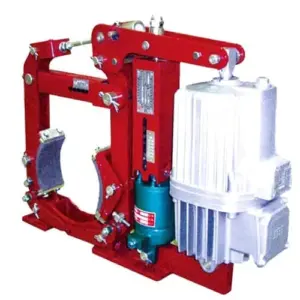

A service brake is intended for dynamic stopping during normal operation—slowing or stopping rotating machinery while it is moving. It must handle repeated braking events, dissipate heat effectively, and deliver predictable deceleration. A holding (parking) brake is primarily designed to keep equipment stationary at rest, maintaining static torque to prevent drift, rollback, or load drop.
In many industrial systems, especially lifting equipment, the brake may need to perform both roles. However, not all holding brakes are suitable for frequent dynamic stops. A spring-applied, power-released fail-safe brake is often used as a holding brake and as an emergency brake, while a separate service brake (or controlled drive/braking resistor) may be used for routine deceleration.
When selecting, confirm: duty cycle (stops/hour), thermal capacity, required holding torque with safety factor, and whether the brake is rated for emergency dynamic stops. Proper separation of “service” vs “holding” extends life and improves safety.