احصل على عرض سعر
يرجى ترك رسالة لنا، وسنرد خلال 12 ساعة.
![[Translate to Arabic placeholder]](https://www.takebrakes.com/wp-content/uploads/2025/04/logo-300x51.png)
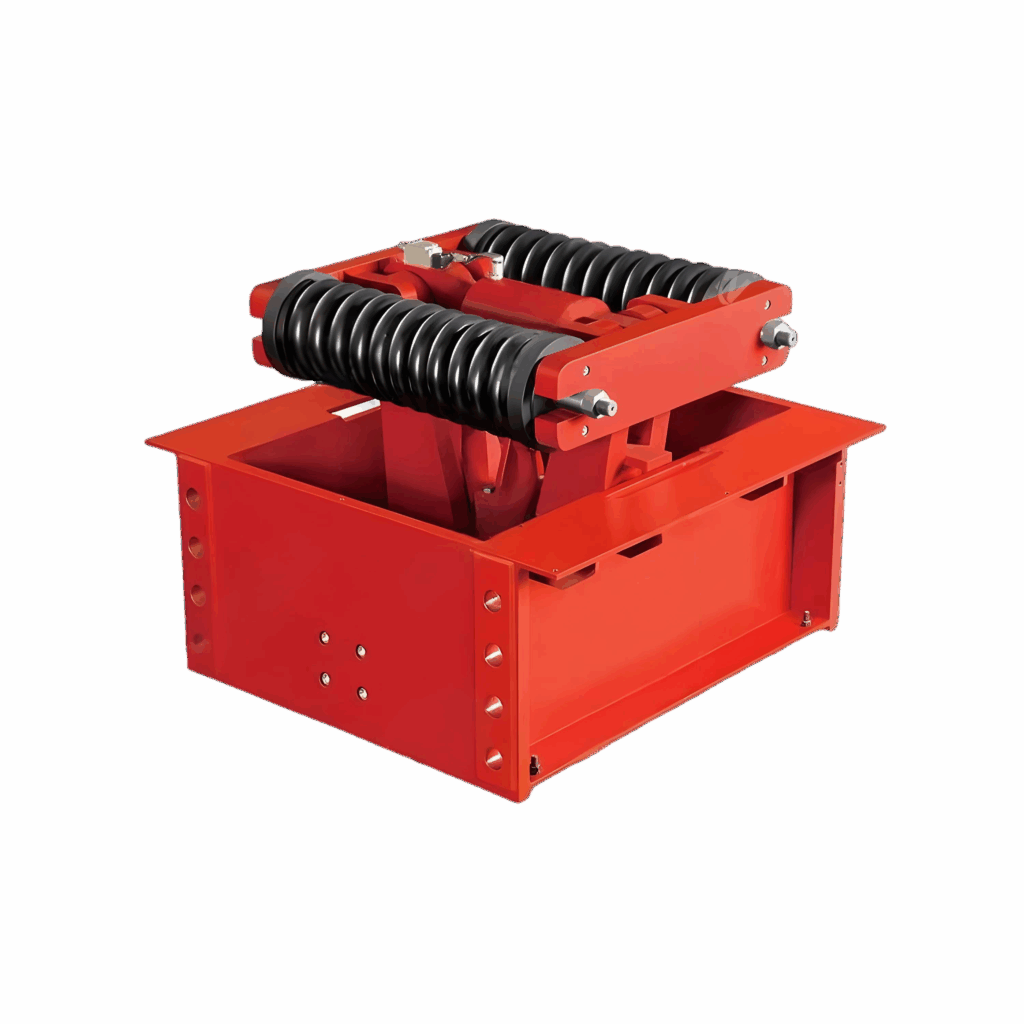
A مشبك السكة الحديد is a powerful mechanical braking device designed to secure heavy, rail-mounted machinery in a fixed position. Unlike dynamic brakes that decelerate motion, a rail clamp functions as a static parking, holding, or emergency brake. Its primary function is to apply a significant clamping force directly onto the sides of the rail head, preventing the machine—such as a gantry crane, stacker-reclaimer, or ship-to-shore crane—from moving unintentionally due to external forces like high winds, operational inclines, or accidental contact.
Operating Principle and Design
Rail clamps are engineered for reliability and safety, most commonly employing a spring-applied, hydraulically-released أو electrically-released mechanism. In this fail-safe design, a robust set of springs provides the immense force required to engage the clamp’s jaws onto the rail. The clamp remains engaged in its default state, even without power. To release the clamp and allow the machine to move, hydraulic pressure or electrical power is applied to overcome the spring force and retract the jaws. This ensures that in the event of a power failure, the clamp automatically engages, securing the equipment and preventing a potentially catastrophic runaway situation.
Key Applications and Types
تطبيق قابضات السكك الحديدية أمر حاسم في الصناعات التي تعمل فيها المعدات الثقيلة على القضبان، بما في ذلك الموانئ، التعدين، مصانع الفولاذ، ومرافق مناولة المواد بالجملة. وغالبًا ما تُصنّف حسب وظيفتها الأساسية:
A rail clamp is not merely an accessory but a fundamental safety system. Its robust design and fail-safe operation are essential for protecting high-value capital equipment, ensuring the safety of personnel, and maintaining operational integrity in demanding industrial environments.