현대의 풍력 터빈은 바람의 힘을 정밀하고 효율적으로 활용하도록 설계된 공학의 경이입니다. 그러나 에너지를 포착하는 만큼 이를 제어하고 필요할 때 거대한 구조를 안전하고 완전히 정지시키는 능력이 중요합니다. 이 제어는 요, 피치, 로터의 세 가지 시스템의 정교한 상호 작용을 통해 달성됩니다.
그들은 모두 어떤 의미에서든 “제동”을 포함하지만, 자동차의 조향, 서비스 브레이크, 비상 핸드브레이크처럼 기능이 서로 다릅니다. 각 역할을 이해하는 것이 풍력 터빈의 안전 및 운전 전략을 이해하는 데 핵심입니다.
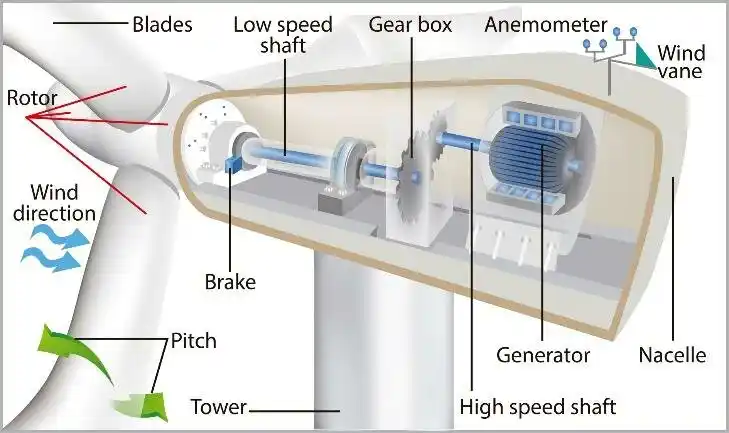
1. 요 시스템: 터빈 운전 방향 제어
목적: The yaw system’s job is not to stop the blades, but to orient the entire nacelle (the main housing) so that the rotor is always facing directly into the wind. This maximizes energy capture and minimizes harmful, off-axis loads on the structure.
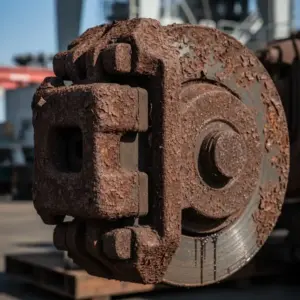
How it Works: The nacelle sits on a large ring bearing at the top of the tower. A series of electric or hydraulic motors, the “yaw drives,” turn the nacelle. The Yaw Brakes are a set of powerful, spring-applied, hydraulically released caliper brakes that clamp onto a large yaw disc or ring.
- 운전 중: 요 브레이크는 바람 방향에 맞춰 네클을 단단히 고정하기 위해 사용됩니다. 작은 조정과 구조적 진동의 댐핑을 허용하기 위해 자주 ‘슬립-브레이크’ 모드로 적용되고 해제됩니다.
- 기능: 터빈의 방향에 대한 “주차 브레이크”로 생각하세요.
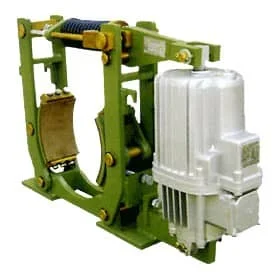
기술: Yaw brakes must provide extremely high holding torque and be incredibly reliable. This is why spring-applied, hydraulic caliper brakes like our SH Series Fail-Safe Brakes
2. 피치 제어: 속도 제어 및 제동의 기본 방법
목적: The pitch control system is the turbine’s primary and most elegant method for controlling rotor speed and power output. It is also the first line of defense in an emergency stop.
How it Works: Each blade is attached to the hub via a bearing that allows it to rotate along its long axis. This rotation is called “pitching.” A hydraulic or electric pitch control system can instantly change the angle of attack of all three blades simultaneously.
- 운전 중: 시스템은 바람 속도가 터빈의 정격 한계를 초과했을 때 로터 속도와 동력 출력을 일정하게 유지하기 위해 블레이드 피치를 미세 조정합니다.
- Shutdown 중: 터빈을 멈추려면 블레이드를 “깃발펴기”처럼 90도 바람 방향으로 각도 조정합니다. 이것은 공기역학적 양력을 즉시 제거하여 로터가 급격하고 안전하게 느려지게 합니다. 이것이 일반 정지와 비상 정지 모두에 대한 기본 제동 방법입니다.
기능: This is the equivalent of the main service brakes on a car, using aerodynamics instead of friction.
3. 로터 브레이크: 궁극적 안전장치
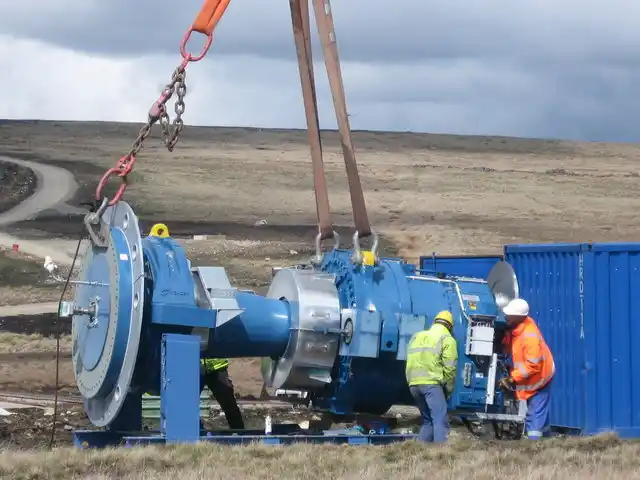
목적: If pitch control is the service brake, the Rotor Brake is the ultimate emergency handbrake and parking lock. Its primary roles are to bring the rotor to a complete stop after it has been slowed by the pitching system and to lock it securely for maintenance.
How it Works: The rotor brake is a massive disc brake, very similar in principle to a yaw brake. It is typically located on the high-speed shaft of the gearbox (between the gearbox and the generator).
- 비상 정지 중: 블레이드를 깃발펴고 나면 로터 브레이크가 작동하여 느리게 회전하던 로터를 완전히 정지시킵니다(0 RPM). 이것은 자체적으로 로터를 전체 속도로 멈추도록 설계되지 않았으며, 관련 에너지가 매우 커 동력전달계에 손상을 줄 수 있습니다.
- 점검 중: 정비공들이 허브 안이나 블레이드에서 작업하는 동안 로터를 움직이지 못하도록 로터 브레이크가 기계적 잠금으로 작동합니다. 이는 중요한 안전 기능입니다.
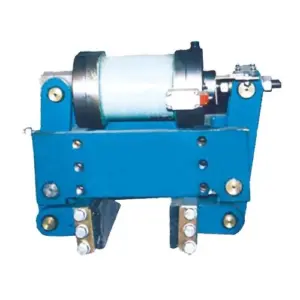
기술: Like the yaw brake, the rotor brake must be absolutely reliable. It is always a spring-applied, fail-safe design. High-torque hydraulic caliper brakes, such as our SDBH_I 시리즈 유압 브레이크
안전의 교향곡
요, 피치, 로터 시스템은 함께 작동하여 풍력 터빈이 효율적으로 작동하고 무엇보다 안전하게 작동하도록 보장합니다.
- 그리고 요 시스템 조향하고 방향을 유지합니다.
- 그리고 피치 시스템 속도를 제어하고 기본적인 공기역학적 제동을 수행합니다.
- 그리고 로터 브레이크 주차 및 비상 시 최종적이고 안전한 기계적 잠금을 제공합니다.
이 관계를 이해하면 견고하고 신뢰할 수 있으며 페일-세이프 브레이킹 기술이 단지 부속품이 아니라 현대 풍력 에너지의 초석임이 분명해집니다.