Angebot anfordern
Bitte hinterlassen Sie uns eine Nachricht, und wir antworten innerhalb von 12 Stunden.

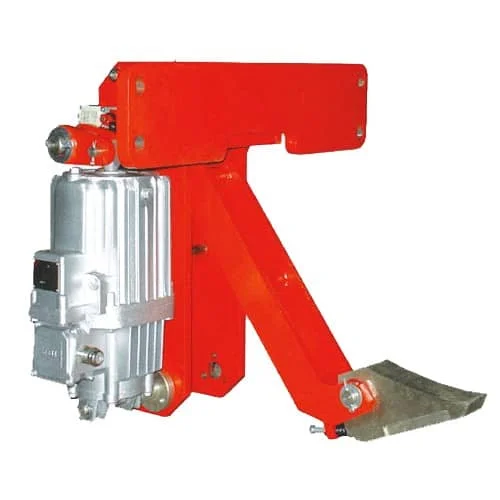
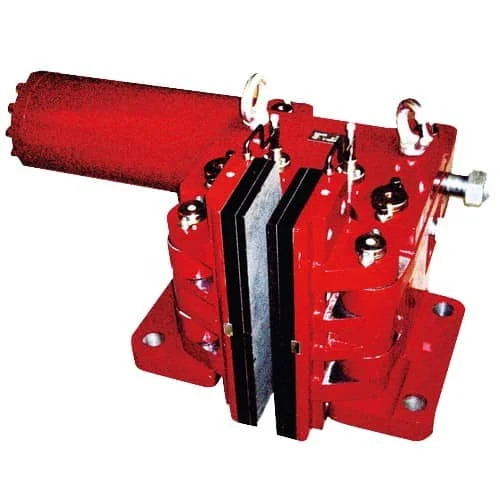
In the context of industrial brakes, Hohe Drehmoment refers to the brake’s capacity to apply a substantial amount of rotational force to stop or hold a load. Torque, measured in Newton-meters (Nm) or pound-feet (lb-ft), is the direct measure of a brake’s “strength.” While the term “high” is relative to the application, it specifically denotes a brake engineered to manage immense forces, whether static or dynamic.
Die Anforderung nach hohem Drehmoment wird von zwei primären Funktionen getrieben:
The required torque rating is also critically dependent on the brake’s location in the drivetrain. A brake installed on the low-speed, high-torque side of a gearbox (e.g., on the final drive shaft) must be able to handle the full, multiplied torque of the load, often requiring ratings in the tens of thousands, hundreds of thousands, or even millions of Newton-meters. This is a common and fail-safe placement for critical holding brakes. Conversely, a brake placed on the high-speed, low-torque side (e.g., on the motor shaft before the gearbox) requires a much lower torque rating, but must be able to handle much higher rotational speeds and thermal loads.