Angebot anfordern
Bitte hinterlassen Sie uns eine Nachricht, und wir antworten innerhalb von 12 Stunden.

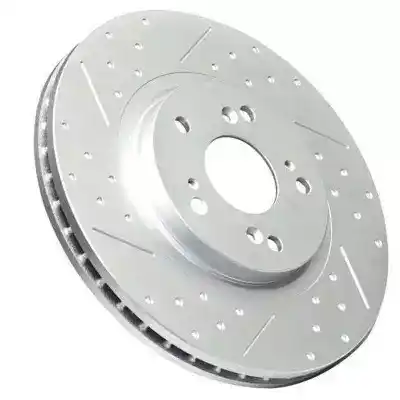
The brake disc, also referred to as the brake rotor in some contexts, is the core circular component within a disc brake system that rotates with the wheel or machine shaft. Its primary function is to provide a stable, wear-resistant friction surface for the brake pads.
You can visualize it as a metal “plate” mounted on a rotating shaft. When braking is required, the brake caliper drives the brake pads to clamp down on this rapidly spinning “plate” like a pair of pliers. Through intense friction, this action decelerates the wheel until it comes to a stop.
Professional Analysis and Design Considerations:
Auch wenn es einfach erscheint, bestimmen das Design und die Herstellung der Bremsscheibe die oberen Leistungsgrenzen des gesamten Bremssystems. Es ist nicht bloß eine passive Reibkomponente, sondern ein aktives thermisches Management-Gerät.
Werkstoffkunde: Industrielle Bremsscheiben werden typischerweise aus hochwertigem Grauguss oder duktiles Eisen hergestellt. Diese Materialien werden aufgrund ihrer hervorragenden Leistungs-Kombination gewählt:
High thermal mass: Capable of absorbing the immense heat generated during braking.
Good thermal conductivity: Enables rapid heat dissipation from the friction surface.
Superior wear resistance and friction stability: Maintains a consistent coefficient of friction at high temperatures while resisting deformation.
Thermal Design: This is the core distinction between standard and high-performance brake discs. Based on heat dissipation capability, they are primarily categorized into two types:
Solid Disc: A solid metal disc. Its simple structure and low cost make it suitable for applications with low braking energy demands and infrequent use, such as parking brakes in small equipment.
Ventilated Disc: The standard configuration for high-performance dynamic braking. It consists of two disc faces connected by numerous radial ribs or blades, forming internal air channels. As the disc rotates, these ribs function like a centrifugal fan, drawing cool air into the center and expelling it outward through the periphery. This forced air cooling actively and efficiently dissipates heat, significantly enhancing the brake’s resistance to thermal fade. Consequently, it enables more frequent and higher-energy braking cycles.
Surface Finish: The friction surface of a brake disc does not benefit from excessive smoothness. It requires specific roughness and finishing processes to ensure rapid establishment of an optimal friction layer (the bedding-in process) with the brake pads and to facilitate the removal of friction-generated debris.
Die Bremsscheibe ist das Bauteil im gesamten Bremssystem, das die höchste thermische Belastung und die strengsten Betriebsbedingungen erträgt. Die Fähigkeit eines Bremssystems, Bremsleistung zu handhaben und den kontinuierlichen Betrieb aufrechtzuerhalten, hängt weitgehend nicht von der Klemmkraft des Kolbens ab, sondern von der Wärmeableitung der Bremsscheibe. Daher ist bei der Bewertung eines Scheibenbrems systems die Analyse des Materials der Bremsscheibe, der Abmessungen (Durchmesser und Dicke) und insbesondere ihrer Belüftungstruktur grundlegend, um das tatsächliche Leistungsniveau zu bestimmen.