OBTENER PRESUPUESTO
Por favor, déjenos un mensaje y le responderemos en 12 horas.

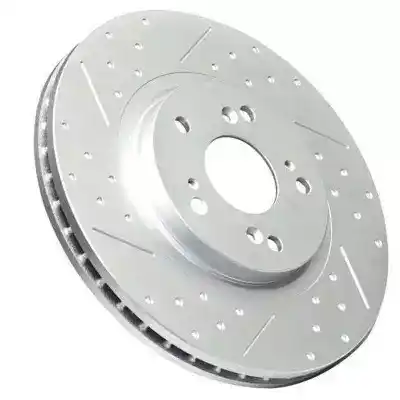
The brake disc, also referred to as the brake rotor in some contexts, is the core circular component within a disc brake system that rotates with the wheel or machine shaft. Its primary function is to provide a stable, wear-resistant friction surface for the brake pads.
You can visualize it as a metal “plate” mounted on a rotating shaft. When braking is required, the brake caliper drives the brake pads to clamp down on this rapidly spinning “plate” like a pair of pliers. Through intense friction, this action decelerates the wheel until it comes to a stop.
Professional Analysis and Design Considerations:
Aunque parezca simple, el diseño y la fabricación del disco de freno determinan los límites superiores del rendimiento de todo el sistema de frenos. No es simplemente un componente de fricción pasivo, sino un dispositivo activo de gestión térmica.
Ciencia de materiales: Los discos de freno industriales suelen estar hechos de hierro gris de alta calidad o de hierro dúctil. Estos materiales se eligen por su excepcional combinación de rendimiento:
High thermal mass: Capable of absorbing the immense heat generated during braking.
Good thermal conductivity: Enables rapid heat dissipation from the friction surface.
Superior wear resistance and friction stability: Maintains a consistent coefficient of friction at high temperatures while resisting deformation.
Thermal Design: This is the core distinction between standard and high-performance brake discs. Based on heat dissipation capability, they are primarily categorized into two types:
Solid Disc: A solid metal disc. Its simple structure and low cost make it suitable for applications with low braking energy demands and infrequent use, such as parking brakes in small equipment.
Ventilated Disc: The standard configuration for high-performance dynamic braking. It consists of two disc faces connected by numerous radial ribs or blades, forming internal air channels. As the disc rotates, these ribs function like a centrifugal fan, drawing cool air into the center and expelling it outward through the periphery. This forced air cooling actively and efficiently dissipates heat, significantly enhancing the brake’s resistance to thermal fade. Consequently, it enables more frequent and higher-energy braking cycles.
Surface Finish: The friction surface of a brake disc does not benefit from excessive smoothness. It requires specific roughness and finishing processes to ensure rapid establishment of an optimal friction layer (the bedding-in process) with the brake pads and to facilitate the removal of friction-generated debris.
El disco de freno es el componente dentro de todo el sistema de frenos que soporta la mayor carga térmica y las condiciones de operación más severas. La capacidad de un sistema de frenos para manejar la potencia de frenado y mantener la operación continua se determina en gran medida no por la fuerza de su mordida del pistón, sino por la capacidad de disipación de calor del disco. Por lo tanto, al evaluar un sistema de freno de disco, analizar el material del disco, sus dimensiones (diámetro y espesor), y especialmente su estructura de ventilación, es fundamental para determinar su verdadero nivel de rendimiento.