
Every fail-safe industrial brake—whether on a crane hoist, conveyor, or wind turbine—needs a way to be opened when power is lost. This is the job of the manual release mechanism. It allows load lowering during outages, maintenance access, or emergency recovery.
However, the manual release is also a frequent source of accidents and equipment damage. If a release lever is left engaged, the brake cannot hold. If a hydraulic hand pump is not vented, the brake drags. If a release screw is forgotten, the load drops.
This article categorizes common manual release types (mechanical lever, hydraulic pump, screw/jack) used on our YWZ13 electro-hydraulic drum brakes, SH hydraulic fail-safe disc brakes, and SE electromagnetic brakes, and outlines the critical safety protocols for each.
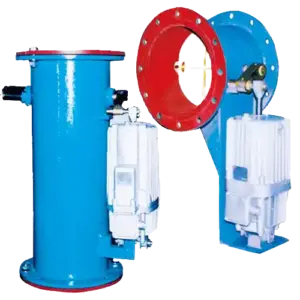
Composite image showing: (A) Hand lever on a drum brake, (B) Hand pump on a hydraulic station, (C) Release screws on an electromagnetic brake.
1) The “Dead-Man” Principle: Why most manual releases must not latch
For lifting equipment (hoists, winches, elevators), the golden rule of manual release is the “Dead-Man” function (auto-return). This means:
- Force required to hold open: The operator must actively pull/push to keep the brake released.
- Auto-close on release: If the operator lets go (e.g., due to panic or slipping), the brake must immediately re-apply and stop the load.
Safety Warning: Never use a latching (locking) manual release on a vertical load unless the machine is mechanically secured (blocked/pinned) first. A latched release turns a fail-safe brake into a “no-safe” brake.
2) Type A: Mechanical Hand Release Lever (Common on YWZ/Drum Brakes)
On electro-hydraulic drum brakes like YWZ13 and YWZ, the manual release is typically a lever attached to the main torque spring tube or thruster linkage.
How it works
Pulling the lever compresses the main spring mechanically, lifting the push rod and opening the shoes. It bypasses the thruster entirely.
Operational Risks & Checks
- Interference: Ensure the lever does not hit the guard, motor frame, or cable tray when pulled.
- Full Return: The most common failure is a lever that gets stuck or bent and doesn’t fully return to the “rest” position. This leaves the brake partially open (dragging).
- Unauthorized Use: On cranes, these levers are often removed or locked out to prevent accidental activation by maintenance personnel walking on the bridge.
3) Type B: Hydraulic Hand Pump (Common on SH/Fail-Safe Disc Brakes)
For high-force caliper brakes like SH series (often used on large winches and conveyors), manual leverage isn’t enough. A small onboard hydraulic hand pump is used.
How it works
The operator closes a manual drain valve, pumps the handle to build pressure, and the brake opens. To re-apply, the operator must open the drain valve to dump pressure back to the tank.
Critical Maintenance Steps
- Always Open the Drain Valve After Use: If you leave the valve closed, the brake stays released (or trapped pressure causes dragging).
- Limit Switch Integration: Many systems include a switch on the hand pump valve handle. If the valve is not in the “Run” (open/drain) position, the main drive should not start.
- Clean Oil Only: Hand pumps are dirt magnets. Keep the fill cap clean; dirty oil introduced here goes directly into your brake cylinder seals.
SH Series Hydraulic Fail-Safe Disc Brakes
4) Type C: Screw/Jack Release (Common on SE/Electromagnetic Brakes)
Electromagnetic brakes (like SE series) often use “release screws” (or “jacking bolts”) that pull the armature plate back against the spring force.
The Dangerous Difference
Unlike a lever, a screw stays where you put it. It does not auto-return. This is a “Latching” release by design.
Safety Protocol
- Tagout Required: If screws are engaged, place a “Do Not Operate” tag on the start button and the brake housing.
- Removal Verification: After maintenance, screws must be backed out fully (and often removed completely or secured in a “parked” position).
- Switch Monitoring: A “manual release monitoring switch” is highly recommended for these brakes. It cuts control power if the screws are engaged, preventing the motor from driving through a released brake (or preventing hoisting if the brake can’t hold).
SE Series Electromagnetic Fail-Safe Brake
5) Monitoring Switches: The electronic safety net
Because manual release mistakes are common, modern industrial brakes increasingly use manual release monitoring switches. These are distinct from “brake open” or “wear” switches.
- Function: Detects if the hand lever is pulled, the pump valve is closed, or release screws are engaged.
- Logic: Usually wired into the emergency stop or start-inhibit circuit. “If Manual Release = Active, Drive = Disabled.”
Field Tip: If you are retrofitting a brake on a critical hoist, adding a manual release switch is one of the highest-value safety upgrades you can make.
6) A Manual Release Safety Checklist (For Operators & Technicians)
Before using any manual release, follow this sequence:
- Verify Load Security: Is the load supported? If lifting, is the area clear? (Gravity never sleeps).
- Check Power Status: Is the main drive locked out? (Prevent fighting the motor).
- Identify the Mechanism: Is it dead-man (lever) or latching (screw)? Plan your exit.
- Actuate Smoothly: Don’t jerk the lever. Sudden release can shock-load the drivetrain.
- Reset After Use:
- Lever: Confirm it returned fully to the stop.
- Pump: Open the drain/relief valve.
- Screw: Back out and torque to “park” position.
- Functional Test: Before returning to service, cycle the brake electrically to confirm normal operation.
Need a manual release option for your brake order?
Not all brakes come with manual release by default (it is often an option code). If your application requires maintenance access or emergency lowering, specify “Manual Release Lever” (for drum brakes) or “Hand Pump” (for hydraulic disc brakes) in your RFQ. We can also integrate monitoring switches to tie the release state into your safety PLC.