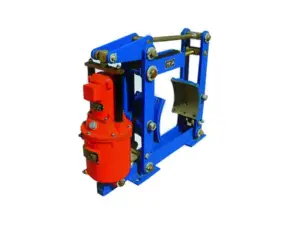
For overhead and gantry crane brakes, lining material choice directly affects torque stability, wear rate, noise, and heat resistance. Organico (NAO) linings can be quieter and less abrasive but may wear faster and tolerate lower temperatures—often suitable for lighter duty or where smoothness is prioritized. Semi-metallic linings are common in heavy industrial cranes because they offer stronger durability and better heat tolerance with stable friction behavior. Sintered metal linings are typically used for extreme conditions (very high temperature, severe contamination, or high energy), but they can increase wear on discs/brake wheels and may be noisier.
L’approccio più sicuro è selezionare rivestimenti approvati per il tuo specifico design del freno e classe di servizio. Un rivestimento che “si adatta” fisicamente potrebbe comunque essere insicuro se il suo intervallo di coefficiente di attrito differisce dalle ipotesi di progettazione del freno. Per sollevamenti critici, privilegia un attrito prevedibile nel tempo e alle temperature, e verifica la compatibilità con il materiale della ruota/disco del freno e le aspettative di intervallo di manutenzione.