GET QUOTATION
Please leave us a message, and we will reply within 12 hours.

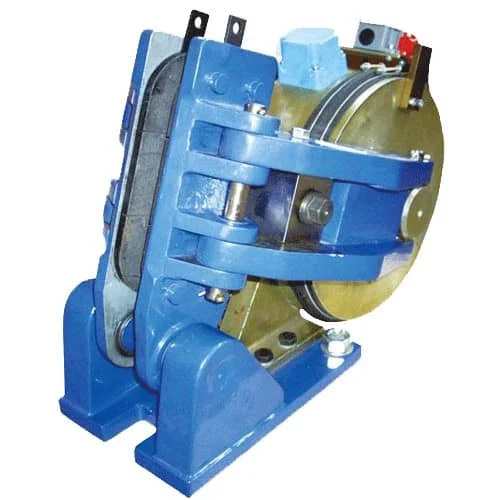
In an elevator system, the brake is a non-negotiable, life-critical safety component whose primary function is to hold the elevator car stationary at a floor. Elevators universally employ fail-safe, spring-applied, DC electromagnetic brakes that are integrated directly with the hoist motor and gearbox, known as the traction machine.
The operational principle is built around inherent safety:
Crucially, this primary electromagnetic brake is distinct from the elevator’s emergency “safeties”—the separate mechanical devices that are triggered by an overspeed governor to physically grip the guide rails in the rare event of a rope failure or uncontrolled descent. Modern safety standards (such as ASME A17.1/CSA B44) mandate extreme redundancy in the primary brake itself, often requiring dual electrical coils or mechanically independent brake calipers to ensure that no single point of failure can compromise the system’s holding capability.